

Thu Bon River In Hoi An: Discover Its History, Culture, And Must-See Sights
The Thu Bon River runs through the heart of Hoi An and has long shaped the town’s history as well as its daily life. It was once a key trade route and still defines much of the atmosphere visitors experience today, especially after dark when lanterns light up the water. More than just a scenic backdrop, the river links Hoi An’s past with its present, from its merchant history to the quieter rhythm of evening walks. For many travelers, it becomes one of the most memorable parts of the town.
What is the Thu Bon River and why is it so important to Hoi An?
The Thu Bon River is the main reason Hoi An developed into a historic trading port and remains central to its identity today.
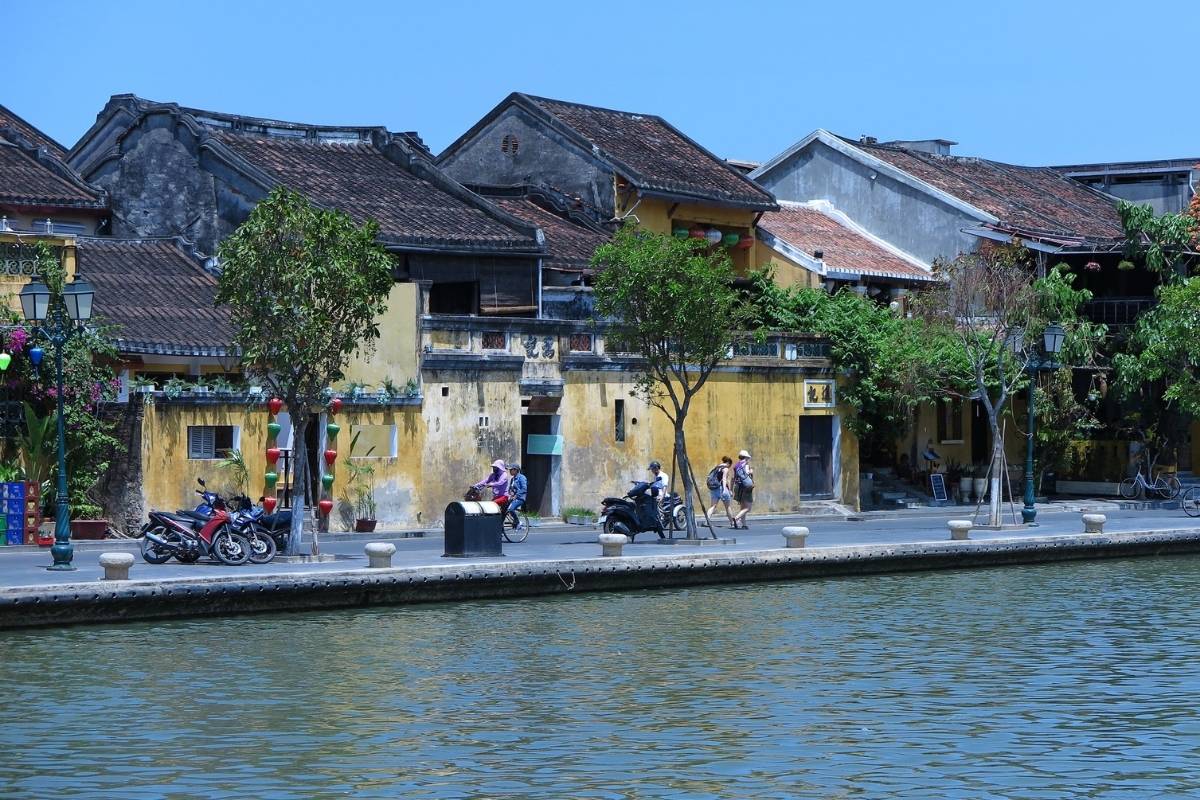
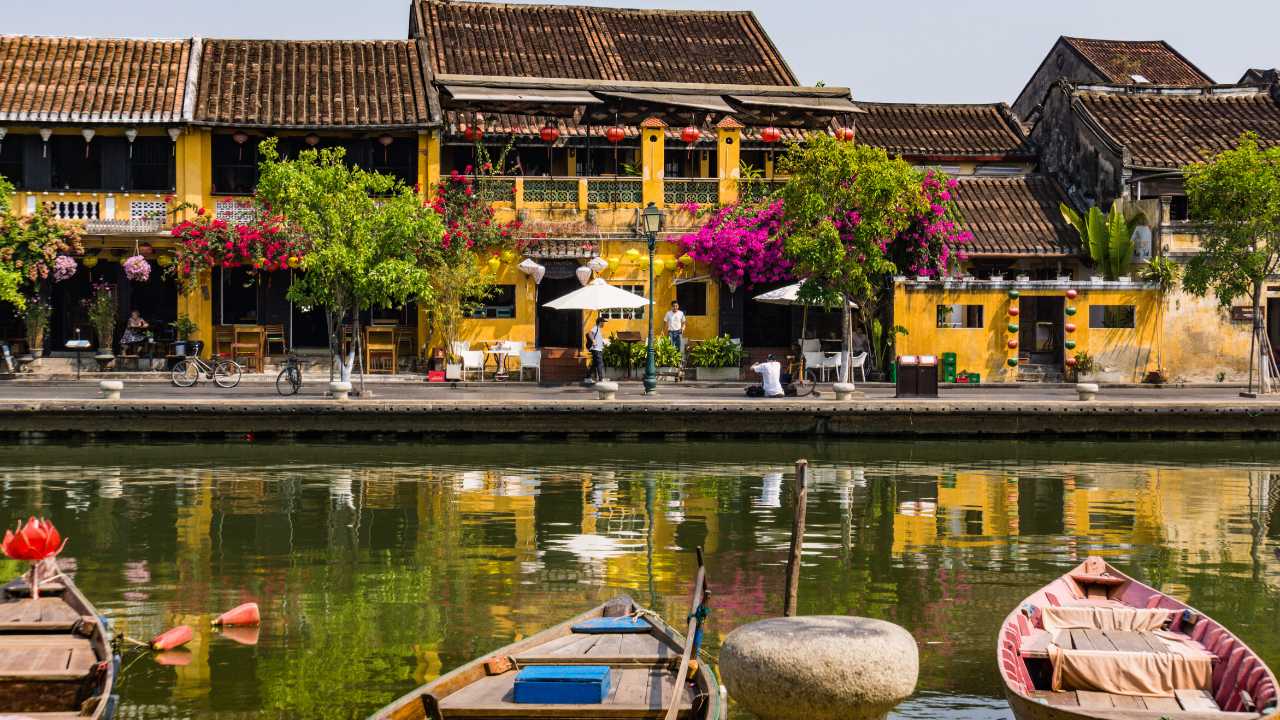
Hoi An Ancient Town sits along the north bank, close to where the river meets the sea at Cua Dai. This location made it an ideal stop for merchants between the 15th and 19th centuries. During that time, the town became one of Southeast Asia’s most active trading ports, a role recognized by UNESCO for its well-preserved heritage.
The river itself stretches about 205 kilometers, making it the largest in Quang Nam Province. It connects inland regions to the coast, which allows goods, people, and ideas to move easily through the area.
Because of this, the Thu Bon River became more than a waterway. It supported trade, linked nearby craft villages, and helped shape the cultural mix that defines Hoi An.
Even today, the river continues to influence daily life, from fishing and transport to tourism and local traditions.
What can you do on the Thu Bon River in Hoi An?
The Thu Bon River offers simple experiences that fit easily into any visit, from short boat rides to evening activities.
You do not need a full tour to enjoy the river. Most activities are easy to access near the Old Town and can be done in a short time. Some visitors choose a quick ride, while others plan around sunset or the evening lantern scene.
Sightseeing boat ride
A short boat ride is the easiest way to experience the Thu Bon River for the first time.
These trips usually last around 20 to 30 minutes and are available along the riverfront near the Old Town. You can book directly on the spot without much planning, which makes it a simple choice for most visitors.
Prices are generally around 100,000 VND per person, or about 150,000 to 200,000 VND per boat. The final cost depends on the type of boat and where you board, especially in the evening when demand increases.
The ride itself is calm and steady. You move along the river at a relaxed pace, passing by both sides of the town. It is enough time to take photos, enjoy the view, and get a sense of the river without committing to a longer activity.
Sunset cruise
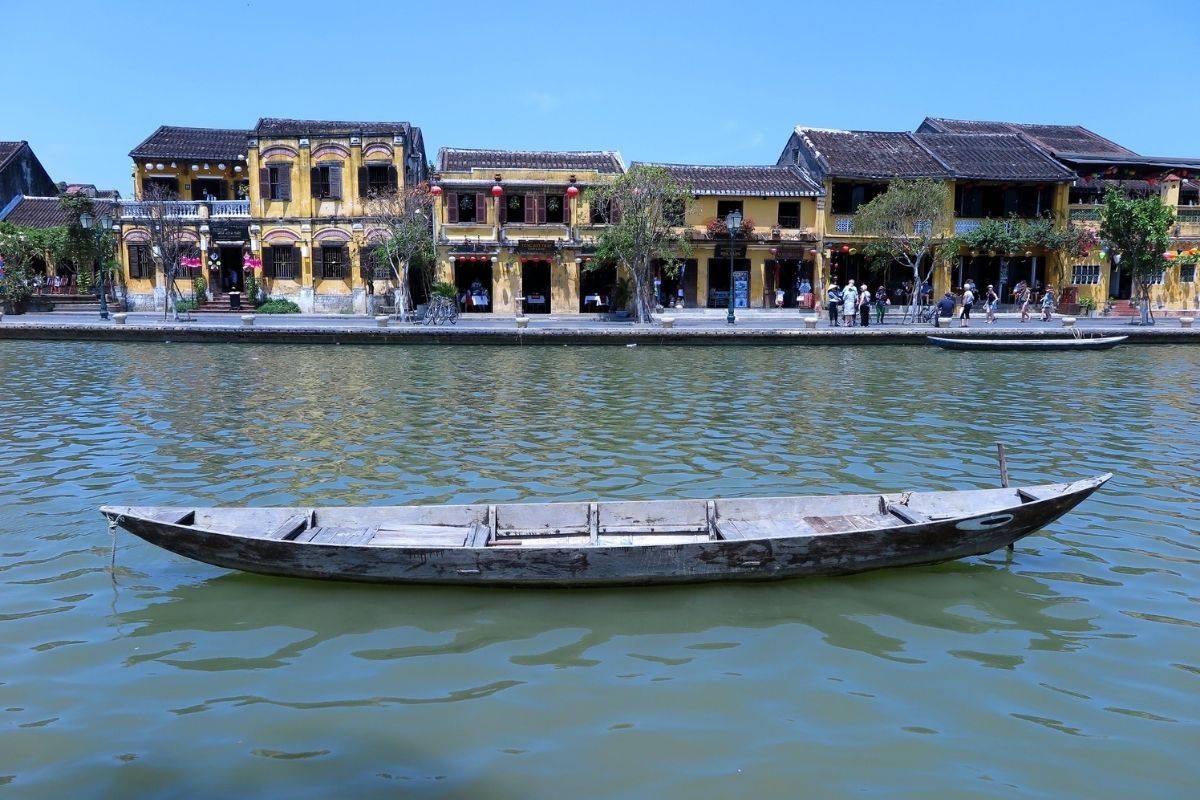
Sunset is widely considered the best time to be on the Thu Bon River.
In the late afternoon, the light becomes softer, and the river reflects the sky more clearly. Many operators suggest starting around 4:00 p.m. to catch this transition from day to evening.
This time of day creates a calmer atmosphere. It also leads naturally into the lantern-lit evening, which makes the experience feel complete.
Prices vary depending on the type of boat and what is included. Simple rides remain affordable, while curated experiences can be much higher. Some sunset cruises include meals or private service, which explains the difference in cost.
For couples, this is often the most memorable option. For photographers, it offers the best conditions for capturing the river at its most beautiful.
Lantern-floating at night
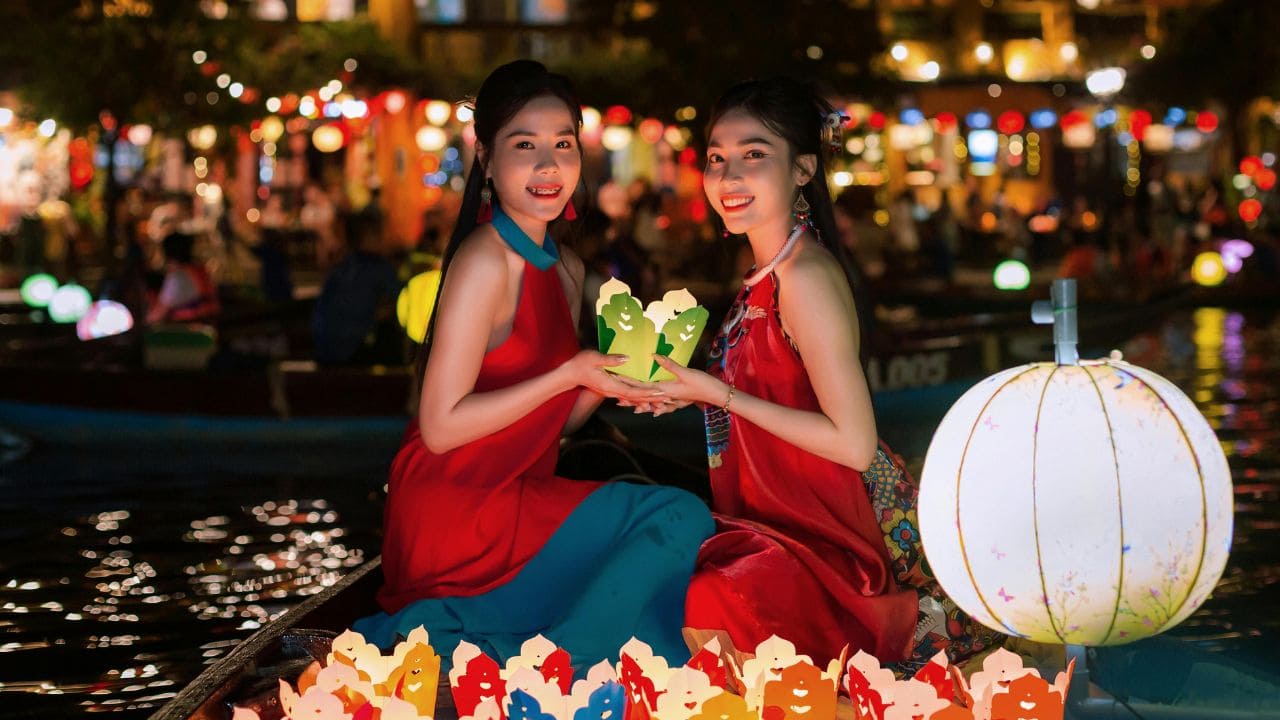
The lantern experience is the most recognizable activity on the river in Hoi An.
Most visitors do this along the Hoai River, which connects to the Thu Bon riverfront near the Old Town. Boats are easy to find around Bach Dang Street, An Hoi Bridge, and the Nguyen Hoang night market area.
The best time is just after sunset, when the lanterns are lit but the river is not yet too crowded. The atmosphere builds quickly, with lights reflecting across the water.
The ride itself is short, but the experience feels immediate. You board, float for a while, and take in the view.
Lanterns are usually sold separately, often for around 10,000 to 20,000 VND each. Many visitors release one into the river, which adds a personal moment to the experience.
It is simple, memorable, and works well for both couples and families.
Riverside walking or cycling
You do not need a boat to enjoy the Thu Bon River, as walking or cycling already gives you a clear view of its atmosphere.
From the Old Town, it is easy to follow the river on foot or by bike. The paths are simple, and you can move at your own pace without planning too much. This makes it a good option if you want a quiet break from busier areas.
Cycling works especially well if you plan to go a bit further. It allows you to move between the river and nearby countryside, adding more variety to your route.
This is also the most flexible choice. You can stop for photos, sit at a café, or take a short detour whenever something catches your attention.
Visiting traditional villages
If you want a deeper cultural experience, visiting traditional villages along the river is one of the best options.
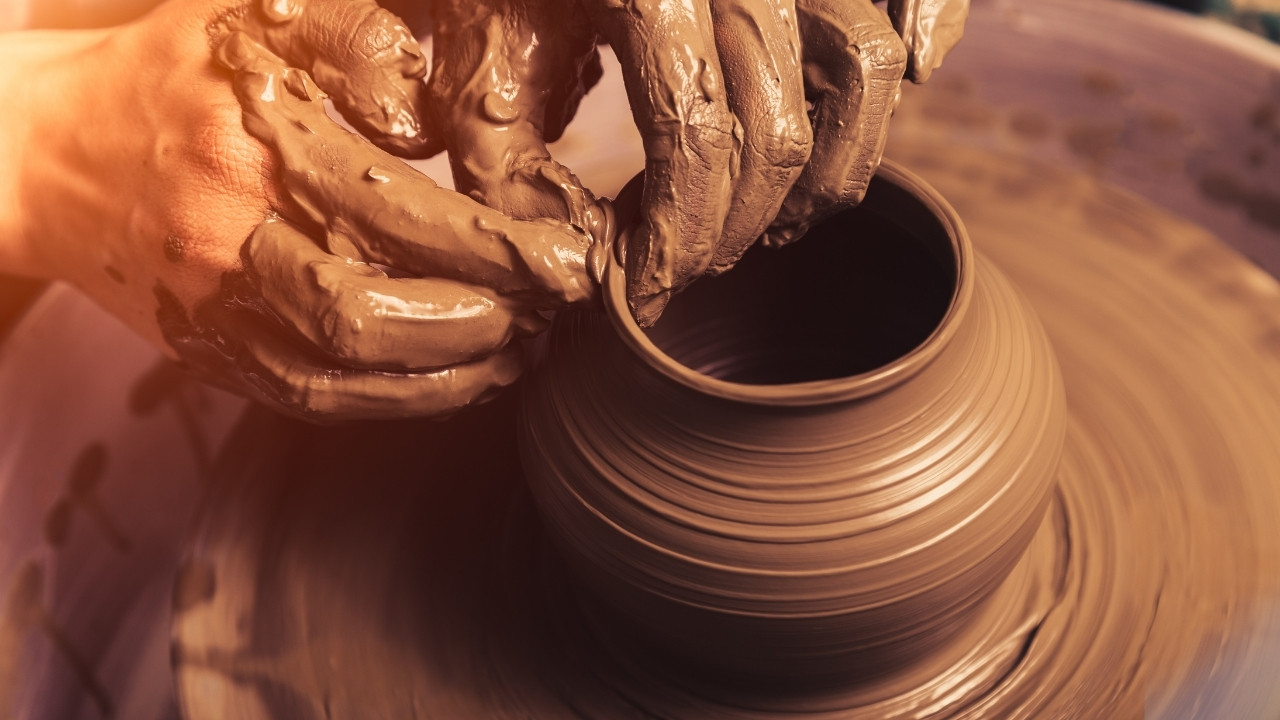
Thu Bon River connects several craft villages that reflect Hoi An’s heritage. Places like Kim Bong Carpentry Village, Thanh Ha Pottery Village, and Tra Que Vegetable Village are all part of this network.
You can reach some of them by boat, with departures often available near Bach Dang Street or Nguyen Hoang Street. These routes are commonly used for visits to Kim Bong and Thanh Ha.
Compared to a short sightseeing ride, this option feels more meaningful. You spend time in working communities and see how traditional crafts continue today.
When is the best time to visit the Thu Bon River?
Sunset is the most popular time to visit because the light creates the most memorable views.
In the late afternoon, the river becomes calmer, and reflections start to stand out. This is when many visitors choose to take a boat or simply walk along the banks.
Early morning is also a good option if you prefer a quieter atmosphere. Late afternoon works well for cycling, especially when the heat begins to ease.
Many travelers also associate the river with Hoi An’s lantern evenings, particularly during monthly events when the atmosphere becomes more festive and visually striking.
What is the history and cultural significance of Thu Bon River?
Thu Bon River shaped Hoi An’s history by connecting it to regional and international trade routes.
From the 15th to the 19th centuries, Hoi An functioned as a small but active trading port. UNESCO describes it as a place that exchanged goods with Southeast Asia, East Asia, and beyond.
Before that, the river valley was part of the Champa civilization. Over time, different cultural influences came together along this waterway. Today, that mix is still visible in Hoi An’s architecture, food, and daily life.
The river also supported local livelihoods. Goods from craft villages such as pottery, carpentry, and silk were transported through the port and distributed further.
Even now, traditions connected to the river continue. Lantern-floating, for example, is still part of local life. It is not only for visitors but also reflects a long-standing cultural practice tied to the river.
How do you get to the Thu Bon River in Hoi An?
Getting to the Thu Bon River is simple because it runs directly through the Hoi An Ancient Town area.
Most visitors reach the river just by walking. As you explore the Old Town, you will naturally come across the riverfront without needing directions.
From there, you can decide how you want to experience it. Some people stay on the riverbank, walking, taking photos, or sitting at a café. Others choose to join a boat ride or book a short cruise.
Let The River Lead You Back To Stillness
After spending time along the Thu Bon River, slowing down in a quiet and comfortable space completes the experience.
La Siesta Hoi An Resort & Spa offers a setting that reflects the calm you find by the water. Surrounded by greenery, the resort creates a peaceful contrast to the movement of the Old Town.
The property follows eco-friendly practices and is Travelife-certified, supporting sustainable tourism. It is designed for travelers who want to reconnect, whether with family, a partner, or simply with themselves.
Recognised among the Top 3 Best Hotels Worldwide in 2024 by TripAdvisor, La Siesta combines thoughtful service with a strong sense of place.
After a day shaped by the river’s history and atmosphere, this is where the pace slows. Follow that rhythm, rest, and let La Siesta welcome you back with comfort and calm.